
Airway orthodontics looks at how the size and position of the jaws affect breathing, so if your child snores, breathes through the mouth or wakes tired, an orthodontic evaluation can check whether a narrow palate or small jaws are part of the picture.
At Dutchess Orthodontics, our treatment philosophy is not only to straighten teeth but also to balance the face and jaws, and airway orthodontics is a big part of that approach. This article explains the signs parents notice at home, what an evaluation involves and how orthodontic care fits alongside your child’s physician and other specialists.
What Is Airway Orthodontics?
Looking beyond straight teeth
Traditional orthodontics focuses on aligning teeth and correcting the bite, while airway-focused care also considers how the jaws, tongue and palate shape the space available for breathing. Crooked teeth and small jaws are often a sign of an underlying issue, so we look at the whole picture rather than the teeth alone.
Why jaw size matters
When the jaws are small, the tongue may have little room and can fall back toward the airway during sleep. In growing children, guiding jaw development can create more space for the tongue and the permanent teeth, which is why we pay close attention to airway signs during early evaluations.
Which Signs Should Parents Watch For?
Signs you may notice at night
Parents are often the first to notice that something is off while a child sleeps. Common signs include snoring or noisy breathing, frequent waking or trouble staying asleep, restless sleep positions and breathing through the mouth rather than the nose.
Signs you may notice during the day
Daytime clues can be just as telling, including tiredness, trouble focusing, recurring ear infections and a habit of keeping the lips apart at rest. Crowded or misaligned teeth and certain facial growth patterns can also point toward an airway concern worth discussing.
What Can Cause Breathing and Jaw Growth Problems?
Common contributing factors
Allergies, swollen tonsils and adenoids, thumb-sucking habits, chronic mouth breathing and underdeveloped facial muscles are among the reasons the jaws may not develop as fully as they could. These factors often overlap, so one child may have several at once.
Why it can become a cycle
Mouth breathing can influence how the jaws and palate grow, and a narrow palate can in turn make nasal breathing harder. Breaking that pattern early, while a child is still growing, is often easier than trying to address it after growth has finished.
How Does Sleep Quality Affect Children?
Rest affects much more than mood
Sleep-disordered breathing has been linked with attention difficulties, reduced physical performance and challenges at school. A child who sleeps poorly may seem irritable or distracted, and families do not always connect those changes to how the child breathes at night.
Who diagnoses sleep problems
An orthodontist does not diagnose sleep apnea on their own. If we see signs of a breathing concern, we collaborate with ENT specialists and sleep medicine doctors, who can evaluate the airway and sleep more completely.
What Happens During an Airway-Focused Evaluation?
A wider set of questions
Our evaluations include a thorough look at your child’s teeth, jaws and facial structure, along with questions about breathing patterns and sleep habits. Parents who bring notes about snoring, waking and daytime energy give us a much clearer picture.
Detailed imaging when it helps
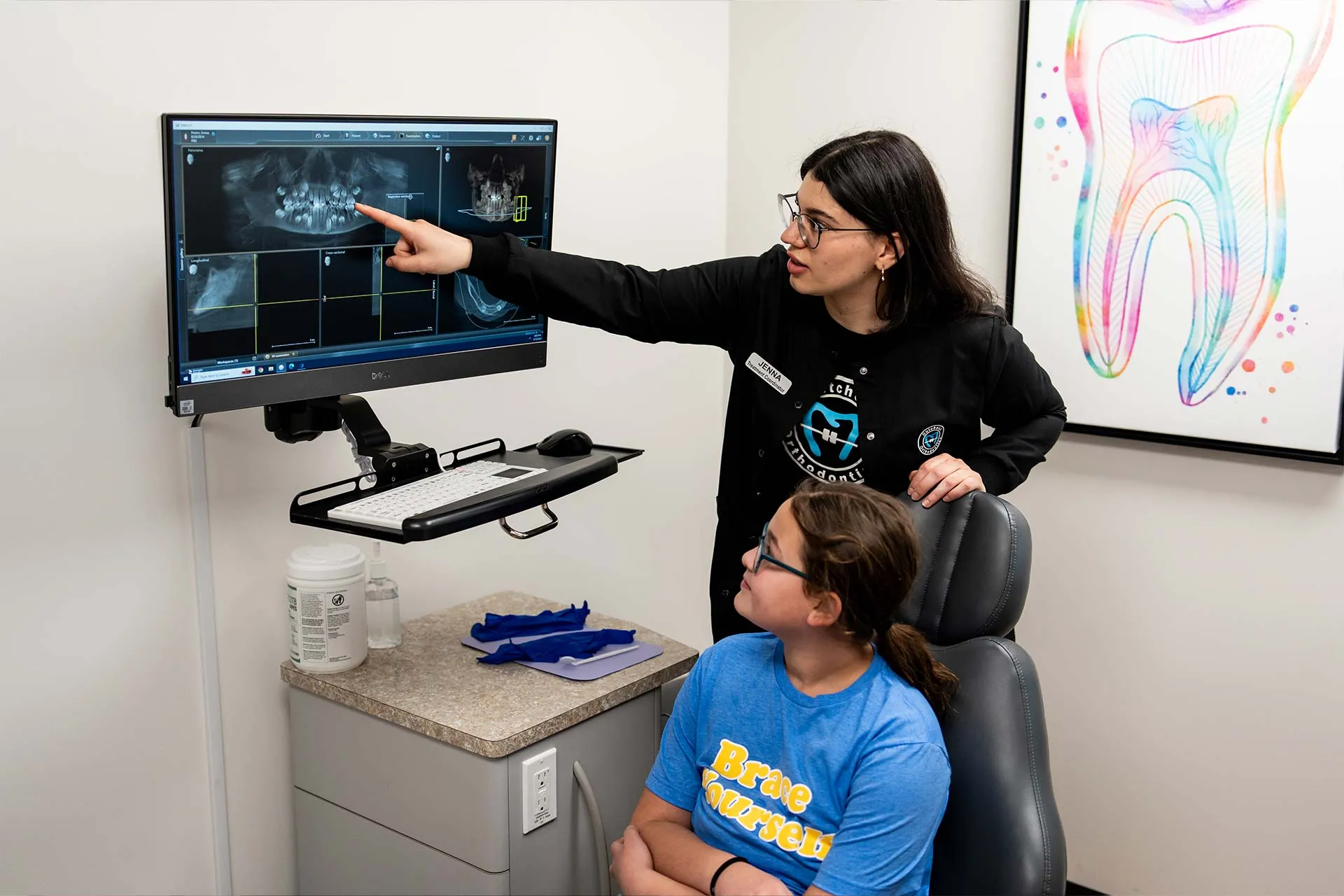
When more detail is useful, our technology includes CBCT imaging, which provides three-dimensional views of the teeth, bone and surrounding structures. That level of detail can help us see relationships that traditional two-dimensional X-rays may not show.
How Can Orthodontic Treatment Support Better Breathing?
Expanding and guiding the jaws
In many cases, we recommend expanding and advancing the jaws with specialized appliances. Expanding the palate or correcting the bite can create more room for the tongue and may improve airway space, along with facial balance and room for incoming teeth.
Timing for children and adults
Treatment is often most effective during childhood growth, which is one reason early treatment matters. Adults can also benefit from airway-focused care, and some severe jaw discrepancies are best addressed with surgical orthodontics coordinated with an oral and maxillofacial surgeon.
How Do Airway Signs Compare With Typical Childhood Habits?
A simple checklist for parents
Not every snore or open-mouth moment is a problem, so the table below helps separate occasional behavior from patterns worth mentioning at an evaluation. When in doubt, bring your observations and let us take a look.
| What you notice | Usually less concerning | Worth an evaluation |
|---|---|---|
| Snoring | Only during a cold or allergy flare | Most nights, or loud and noisy |
| Mouth breathing | Occasional, with a stuffy nose | Lips apart at rest most of the day |
| Sleep | Restful most nights | Frequent waking or restless sleep |
| Daytime energy | Normal for age | Ongoing tiredness or trouble focusing |
| Teeth and jaws | Spacing that fits growth | Crowding, narrow arch or crossbite |
When Should You Schedule an Evaluation?
Earlier is often easier
The American Association of Orthodontists recommends a first orthodontic check-up around age 7, and airway signs are a good reason not to wait beyond that. Early treatment typically happens between ages 7 and 10, when growth can still be guided.
Signs at any age deserve attention
If your teen or you as an adult notice snoring, jaw discomfort or chronic mouth breathing, it is still worth asking. Our team can explain whether orthodontic care has a role and when a physician should be involved.
What Are the Next Steps for Your Family?
Start with a conversation
If your child shows any of these signs, schedule a free consultation at our Hopewell Junction office and bring your notes about sleep and breathing. Dr. Walters or Dr. Brenner will review what they see and explain whether monitoring, treatment or a referral makes the most sense.
Frequently Asked Questions
Can orthodontic treatment fix sleep apnea?
Orthodontics is not a standalone fix for sleep apnea, and a physician or sleep specialist is the right person to diagnose it. Expanding or advancing the jaws can create more airway space in some patients, so orthodontic care may be one part of a plan built with other specialists.
Is snoring in children always a problem?
Occasional snoring during a cold is common and usually passes. Regular, loud snoring, especially with mouth breathing or restless sleep, is worth mentioning to your pediatrician and at an orthodontic evaluation.
What age is best for airway-focused treatment?
Many children are evaluated around age 7, and early treatment often happens between ages 7 and 10 while the jaws are still growing. Older patients can still benefit, though the approach may differ once growth is complete.
Will my child need braces too?
It depends on the individual case. Some children use an expansion appliance first and need braces or aligners later, while others need only monitoring after early treatment.